Own your content. Control your story.
WordPress VIP is the enterprise CMS built for newsrooms, with the analytics, security, and control to publish on your own terms.




Trusted by the world’s biggest newsrooms and publishers
WordPress VIP is the original open-architecture, enterprise-grade content platform. Publishers use it to control their brands in the age of AI. Structure every story so answer engines read it correctly. Own your content, tech stack, and audience data, no matter how the industry shifts. Editors get subscriber intelligence and content testing from that data.
100K
+
requests per second handled by TIME during the Taylor Swift Person of the Year announcement
22B
+
requests served during
the 2024 US election with
100% uptime
99.99
%
uptime during election nights, Super Bowl, and NASA landings
106
%
increase in paid subscriptions at Slate using Parse.ly data
120
%
increase in organic search pageviews at Her Campus, year over year

The reality
The first interaction with your content isn’t a reader anymore. It’s an AI.
Search traffic has moved to generated answers, and AI now sits between the story and your audience. Every publisher is answering the same question: “Do you want AI to cite you, license your archive, or keep parts of it off limits?” That’s for you to decide, not your CMS.
WordPress VIP shows you which bots and crawlers reach your content, and you set what they can access. When you want to be cited, every block is structured so answer engines read it correctly, however the AI landscape changes.
Content creation and editorial operations
A CMS your editorial team actually controls
Publish at the pace of the news with the Gutenberg block editor, in a format answer engines read correctly.
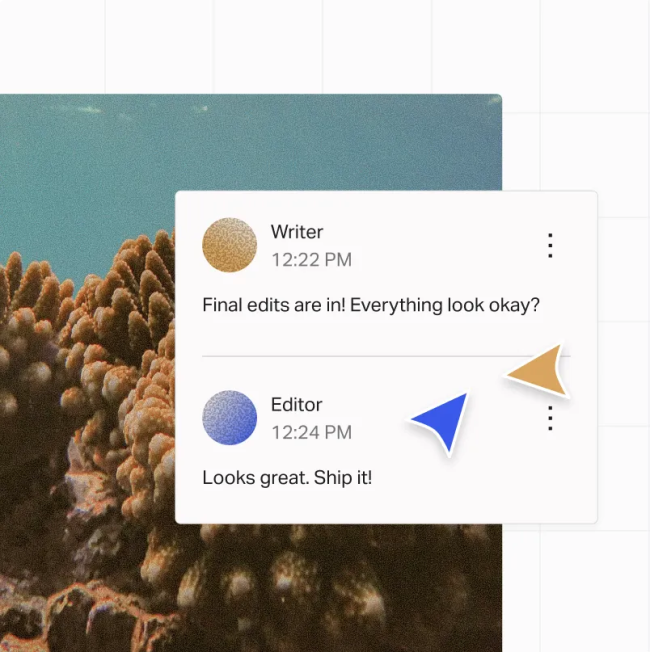
- Editors collaborate in real time and publish without a developer
- Pre-approved blocks and templates keep every story on brand
- Every block outputs semantic HTML, schema.org, and JSON-LD automatically
- 60,000+ plugins and the world’s largest WordPress agency ecosystem are ready to extend the platform how you want
SECURITY AND GOVERNANCE
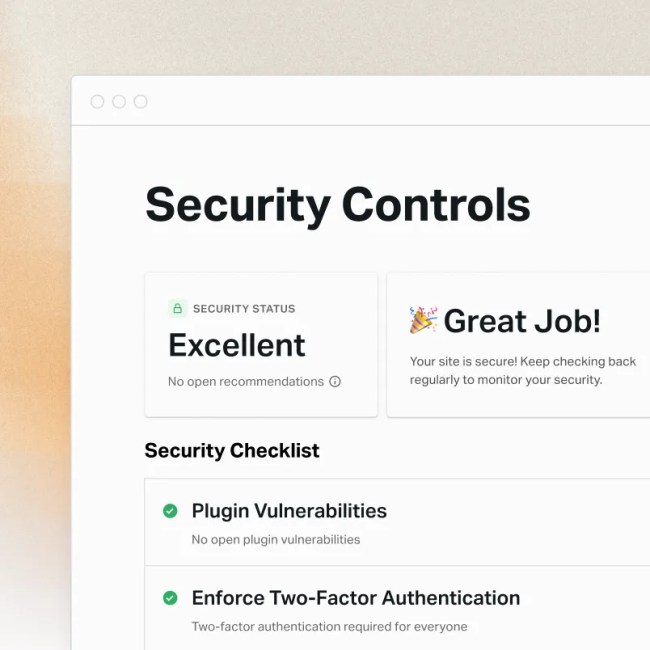
Your newsroom’s freedom shouldn’t come with a security trade-off
Get the freedom of Open Source with security for large-scale publishing. Build exactly what your editorial operation needs on a security layer VIP maintains.
- No vendor lock-in: Open standards, full code transparency
- FedRAMP Certified: The only authorized enterprise WordPress platform
- SOC 2 Type 2: Certified and audited annually
- Vulnerability detection: Built-in WPScan to scan plug-ins and installs
- Brand governance: The same block-level controls governing AI agents as your editorial team
- LLM access controls: You decide which AI systems can reach your content
Content intelligence by Parse.ly
Own your audience instead of renting it
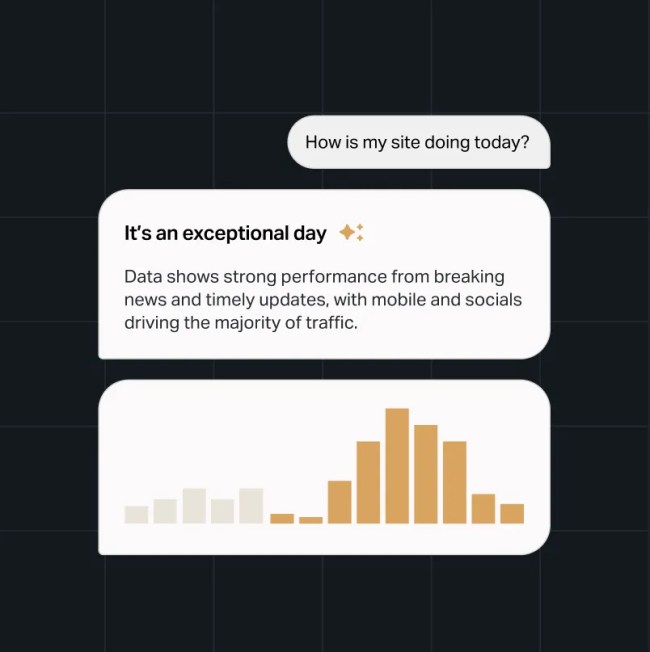
Platform algorithms change without notice. Social referral disappears overnight. If your content strategy depends on metrics from channels you don’t control, every update resets the playbook. Parse.ly, our integrated content analytics designed for editorial teams, surfaces audience directly insights in the CMS. Ask questions in plain language. Get answers without an analyst queue.
- Full conversion journey tracking: anonymous visitor to paid subscriber
- Subscriber and registered reader segmentation
- Scroll depth, return visits, engaged time, and composite loyalty scores
- AI-powered headline testing
- Content Intelligence panel inside the WordPress editor
Infrastructure and performance
Built to handle breaking news, viral moments, and election nights with zero downtime
WordPress VIP handles the infrastructure so your team never has to. When traffic spikes, it scales. When attacks hit, they’re absorbed. Your editorial team keeps publishing. Your audience keeps engaging.
- Global infrastructure across 28 data centers with our proprietary CDN
- Up to 99.99% uptime, zero DDoS downtime
- Self-healing and auto-scaling infrastructure
AI governance
Govern AI access the same
way you govern your team
AI agents, models, and workflows on WordPress VIP operate under the same role-based, block-level permissions as your editorial team, not a separate governance layer you have to build. Brand guidelines encoded once. Every model and workflow pulls from the same source of truth.
For AI systems outside the platform, you set the terms. Granular access controls let you decide which systems can reach your content, and at what level.

How publishers are growing
on WordPress VIP
The biggest names in media use WordPress VIP to publish faster, scale reliably,
and turn audience data into revenue.

The Times
Revamped workflows using WordPress VIP, improving efficiency by 34% and lowering CMS training from 2 days to 30 minutes.

“Feedback from the newsroom was great. We previously needed 2 days of training to get journalists up and running on our old solution. We now train them in half an hour.”
Luke Sikkema
Head of Editorial Operations, The Times

News UK
Accelerated content production by 60% after adopting the new block editor.
60%
faster content production


Slate
Used engaged time and Parse.ly insights to grow paid subscriptions 106% year over year.
106%
growth in paid subscriptions year over year


Al Jazeera
Cut journalist training from weeks to under two hours after moving to headless WordPress.

“The choice of decoupled WordPress plus GraphQL and React will allow us to build something unique and amazing. WordPress VIP was really a very smart decision.”
David Hostetter
Digital CTO, Al Jazeera

TIME
Even at “peak Swift,”
TIME.com effortlessly handled
the incoming tidal wave without
downtime or drama.
100K
requests/second
during the Taylor Swift Person of the Year announcement

WHY WORDPRESS VIP FOR MEDIA
Designed for publishers,
not adapted for them
Most evaluations come down to the same short list.
Here’s how they stack up.
Platform
What it means in practice
ArcXP / Chorus / Brightpot
Built for publishing, but editorial teams often hit ecosystem limits and heavy implementation
Adobe Experience Manager
Powerful, but expensive, developer-dependent, and slow to implement
Drupal / custom builds
Flexible, but requires ongoing engineering investment that never stops
WordPress VIP
Editorial speed, content intelligence, proven scale, and no lock-in
Frequently asked questions
Can WordPress VIP handle breaking news traffic spikes?
Yes. The infrastructure scales dynamically, no pre-provisioning required. During the 2024 US election, WordPress VIP served over 22 billion requests with 100% uptime and zero DDoS downtime. TIME handled over 100k requests per second during the Taylor Swift Person of the Year announcement without blinking.
Does WordPress VIP support multi-site publishing across multiple brands or titles?
Yes. WordPress VIP supports multi-site operations for organizations managing multiple brands, titles, or regional editions on a single platform. iOne Digital launched 60 sites in three weeks. Thought Catalog reused content across a network of sites through standardization.
How does WordPress VIP integrate with existing ad tech, paywall, and subscription platforms?
Through open API architecture, 60,000+ plugins, and remote data blocks for connecting external data sources. Parse.ly’s conversion journey tracking connects directly to subscriber and registered reader segmentation, so your team sees the full path from anonymous visitor to paid subscriber.
How does WordPress VIP protect publisher content from unauthorized AI scraping?
LLM access controls let you decide which AI systems can access your content. Set permissions at the site, section, or content level. You can protect your archive while using AI-powered features like Parse.ly Sage and headline testing inside your own workflow.
How quickly can editorial teams start publishing on WordPress VIP?
WordPress powers 40% of the web, so many new hires already know WordPress. And thanks to the new Gutenberg block editor, onboarding is even faster. Al Jazeera reduced CMS training from weeks to under two hours. The Times cut training from 2 days to 30 minutes. Most teams are publishing independently on day one.
Does WordPress VIP support headless or decoupled content delivery?
Yes. WordPress VIP supports headless and decoupled architectures for publishers delivering content across web, apps, newsletters, and other channels. The platform’s API-first infrastructure enables flexible front-end delivery while maintaining the full editorial and analytics experience in the back end.
How does WordPress VIP help publishers compete in an AI-driven search landscape?
WordPress VIP structures content for both human readers and AI retrieval. Semantic HTML, schema.org markup, and JSON-LD output automatically from every block, so your content is already in the format AI models have learned to read and cite. WordPress powers 40% of the web, which means the models behind AI-generated answers trained on it more than any other CMS. At the same time, LLM access controls let you decide which AI systems can access your content, so you’re not involuntarily contributing to a competitor’s training data.
You’ve outgrown your CMS. You don’t need to outgrow your next one.
Get a tailored walkthrough that covers your editorial workflows, audience intelligence, and traffic requirements.