Enterprise CMS platform
There’s a reason we run half the internet
Creators know we’re the easiest way to publish. Enterprises know we’re the safest way to scale.
Open Source. Ready for AI.
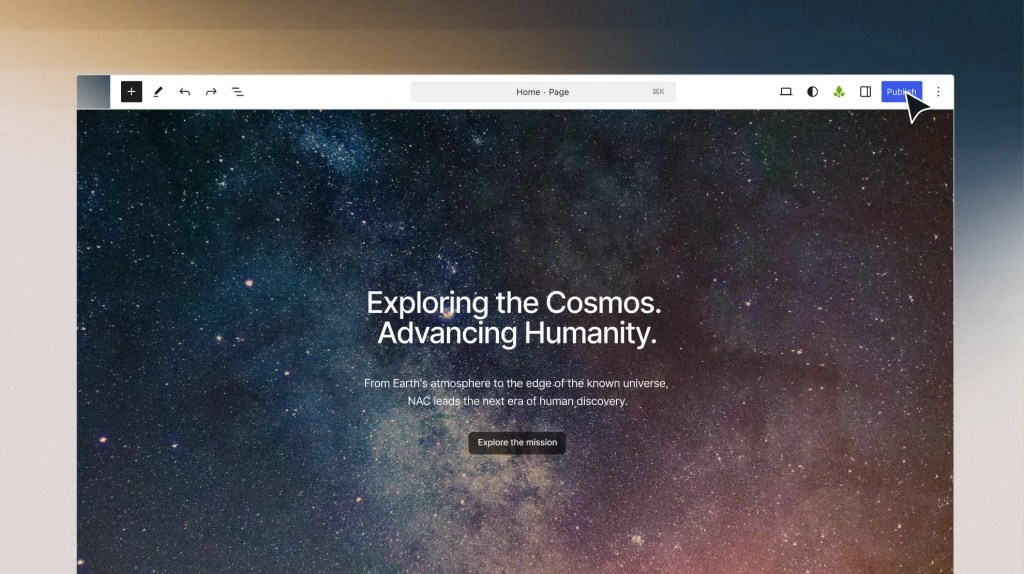
What sets apart an enterprise CMS from the rest
An enterprise content management system manages large-scale digital experiences across complex organizations. Unlike basic CMS tools, enterprise platforms support global traffic, distributed teams, strict governance, composable architectures, and deep integrations with marketing, analytics, and data systems.
Operated by Automattic, WordPress VIP is a fully managed enterprise web CMS that combines AI-ready infrastructure with the highest level of governance and security.
41
%
of the web runs on WordPress, the CMS that helped train AI to read
2.4T
requests a year, equal to nearly half all Google Search traffic
99.99
%
uptime during election nights, Super Bowl, and NASA landings
FedRAMP
Moderate ATO, the standard for U.S. federal agencies and regulated industries
What your CMS needs to do now
AI has changed what a CMS needs to be. Your platform now has to work across three modes at once. Most platforms do one well. WordPress VIP is built for all three.
- Customize: Extend the platform to meet needs that packaged software can’t
- Compose: Connect best-of-breed tools through APIs and an integration ecosystem
- Generate: Use AI agents and tools to create structured content, governed workflows, and applications at a rate not possible even 2 years ago

When enterprise teams choose WordPress VIP
For organizations where content is central to how the business operates, WordPress VIP is a perfect fit. Salesforce, News Corp, Bloomberg, and The White House use VIP in exactly this environment.
Strong fit:
- High growth potential or high-traffic sites
- Multiple sites, brands, or global content teams
- Strict governance, security, or compliance requirements
- Content integrated with marketing, analytics, or commerce
- A need for both content agility and enterprise oversight
When a simpler CMS could
be enough
If you run a single website with a small team and limited integrations, a lighter
platform could be the right call. But if content is complex, high visibility, and
critical to your business, that’s exactly what WordPress VIP is built for.
Start from the situation you’re in
Leaving a traditional
or legacy DXP
For teams looking for less complexity and more flexibility.
Outgrowing mid-market managed
WordPress hosting
For teams that need more control, stability,
and room to grow.
Running WordPress on your
own servers
For teams managing WordPress on AWS, Azure, or Google Cloud.
Moving to WordPress VIP doesn’t mean starting over
If you’re moving from Sitecore, Drupal, Adobe Experience Manager, or legacy WordPress hosting, VIP experts and our partner network handle the migration — content, infrastructure, and integrations. You get a modern platform without losing the investment you’ve already made in your content.
Key features of an enterprise CMS
Content velocity with control
If your team is filing developer tickets to publish content, that’s a platform problem, not a workflow problem.
Move faster without losing consistency. Role-based permissions, brand guidelines, and structured workflows keep quality high across large, distributed teams.
Own your entire content layer, including templates, workflows, site architecture, and publishing. No waiting on engineering, no platform bottlenecks.
Surface performance insights and content analytics inside your editorial workflow through Parse.ly. Teams optimize as they go, not after the fact.
AI with guardrails
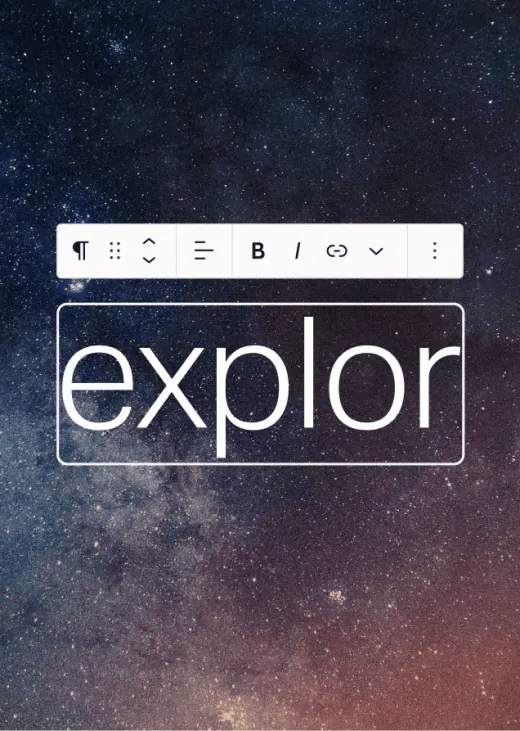
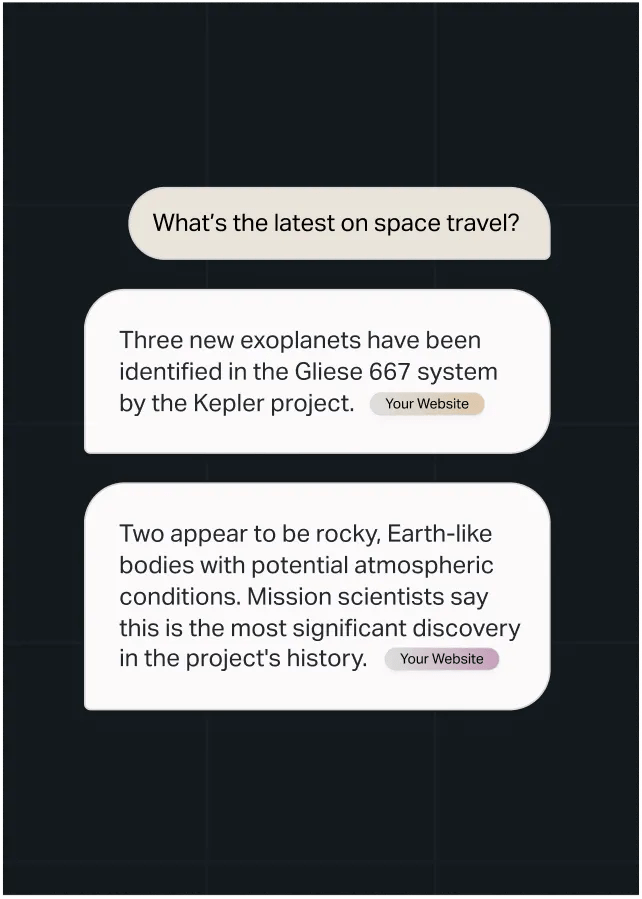
Every platform claims to be AI-ready. Almost none of them mean the same thing by it.
Connect AI assistants directly to your content infrastructure through WordPress VIP’s support for model context protocol (MCP).
Equip agents to understand editorial workflows, take governed actions, and operate within the same permissions and audit trails that govern your editors.
Bring your own AI. Open interoperability means you choose the models, assistants, and tools. You’re not limited to your vendor’s choice.
Structure content for AI discovery by default. Clean semantic markup, structured data, and governed metadata surface your content accurately in AI-generated answers, not just search results.
That’s not content indexing. That’s AI with governance built in.
Integration without lock-in
Most enterprise platforms sell you a bundle and call it a suite. You end up paying for tools you didn’t ask for, locked out of the ones you actually want.
Build on a full API surface through REST and GraphQL.
Bridge your CMS, integrations, and themes to AI agents via MCP, connecting content infrastructure with your team’s tools.
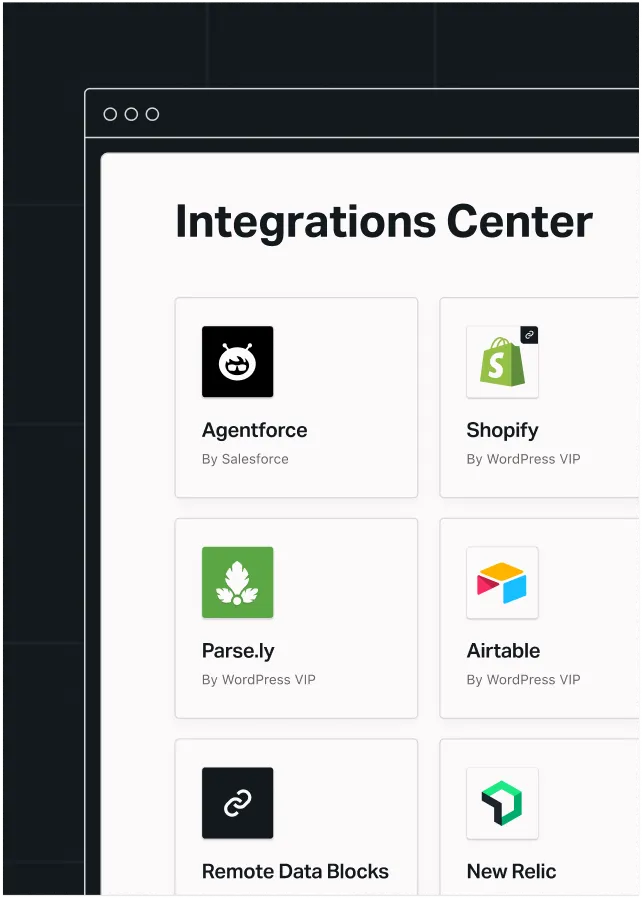
Manage vetted integrations for analytics, governance, search, and more from the Integrations Center. No support ticket needed.
Pull live data from Google Sheets, Airtable, Shopify, Salesforce, and external APIs into the editor through remote data blocks, no custom development needed.
Architecture without tradeoffs
Going headless usually means giving up control for flexibility. With WordPress VIP, even if the architecture changes, the governance doesn’t.
Switch between traditional, headless, hybrid, and composable architectures without replatforming.
Keep workflows, compliance certifications, and platform security intact, regardless of how you deliver your site.

Related resources
When WordPress shouldn’t be headless — evaluating the tradeoffs
Headless vs. hybrid CMS — choosing the right architecture
Reliability at scale
The worst moment to discover your platform can’t scale is when you need it to.
Stay performant under any load with automatic scaling, global CDN delivery, and a 99.99% uptime SLA.
Catch issues before they reach your site with active performance management, not just incident response.
Run without disruption under real-world conditions like election nights, Super Bowls, and product launches.
Eliminate manual overhead. VIP handles all capacity, updates, patches, and monitoring, with a developer available anytime.
Security and compliance built in
Enterprise security shouldn’t be a project on your roadmap. It should already be done.
Protect your site at every layer — the data, network, infrastructure, access, governance, and personnel — with more than a single bolt-on solution.
Monitor all plugins continuously with WPScan vulnerability scanning and get immediate notification on high and critical severity findings.
Block DDoS attacks at the network level before they reach your platform.
Inherit critical security certifications automatically, held and maintained by VIP so you don’t have to pursue them separately.
Developer freedom
A platform that requires certified specialists to customize isn’t flexible. It’s a dependency.
Build on the world’s largest CMS ecosystem without proprietary constraints.
Deploy through GitHub with version-controlled workflows out of the box.
Customize freely and evolve the platform with your requirements, not a vendor roadmap.
How VIP compares to other enterprise CMS platforms
Unlike legacy DXPs or custom builds, WordPress VIP scales without adding complexity.
Evaluation criteria
WordPress VIP
Legacy DXPs (Sitecore, AEM)
Headless CMS (Contentful, Sanity)
Self-hosted Open Source (Drupal)
Content authoring experience
Easy, intuitive visual editor. Already used by 41% of the web. No training or certified specialists needed.
Powerful but complex. Requires dedicated training and implementation teams.
Developer-first. Editors depend on engineering for layout and presentation.
Flexible but uneven. Quality depends on implementation and custom modules.
Governance and compliance
FedRAMP Moderate, SOC 2 Type 2, block-level governance built in.
Vendor-defined governance. Compliance varies by deployment model.
Customer-owned. Compliance layered on separately.
Individually maintained. Compliance is your team’s responsibility.
Total cost of ownership
Predictable platform fee. 40% lower infrastructure costs, 45% less expensive development (Forrester TEI).
High licensing, high implementation, high specialist dependency.
Lower licensing, but significant front-end development investment.
Low licensing, high scaling costs, high maintenance overhead.
Ecosystem and talent
Easy to use and customize through 60,000+ plugins, global network of 1M+ developers.
Proprietary ecosystem. Smaller, more expensive specialist pool.
Midsize ecosystem. Smaller developer community than WordPress.
Large community, but more talent is required to implement.
Architectural flexibility
Traditional, headless, hybrid. All supported without replatforming.
Tightly coupled. Architecture changes require significant rework.
API-first by design. No traditional or hybrid option.
Flexible, but headless requires significant custom development.
AI readiness
MCP support, AI governance built in.
AI features tied to vendor roadmap and proprietary tools.
API-accessible content, but no native AI governance layer.
Community modules available, but no managed AI infrastructure.
Enterprise CMS solutions across industries
Media and publishing
Run high-velocity newsrooms without downtime.
Enterprise brands
Manage dozens of sites and brands without a different system for each.
Public sector
Meet the strictest governance and compliance requirements.
Technology
Build flexible digital foundations that evolve with your stack.
Lower total cost of ownership
Your CMS is either making you money or costing you more than you think
Every platform has upfront costs. The difference is what happens after launch. WordPress VIP lowers your operational burden and turns your content into a growth engine.
45% lower development costs
Launch faster through vetted plugins and a flexible architecture. Or tap into a vast developer talent pool for custom work.
40% lower maintenance costs
Reduce operational costs with managed infrastructure, automated updates, and centralized application management.
Integrated content analytics
Get live performance data inside the content editor without separate analytics contracts or manual reporting.

The future of enterprise content management is open
You’re probably asking the wrong question. “Which AI-native CMS should we migrate to?” leads to expensive transitions and delayed results. The better question is “Can AI act through my platform?”
You need open architecture with a governance layer that makes AI output brand-safe and publishable. WordPress VIP delivers both.
Frequently asked questions
What features should an enterprise CMS have?
Global scalability, content governance, enterprise security, flexible integrations, and customizable architecture. AI readiness is also increasingly important: having structured content and governance designed for both agents and humans.
What’s the difference between an enterprise CMS and a standard CMS?
Standard CMS platforms serve single websites with small editorial teams, minimal governance, and basic infrastructure. Enterprise CMS platforms support multi-brand ecosystems, distributed editorial teams, high-traffic infrastructure, strict governance and compliance, and deep integrations with marketing and analytics systems.
Why is WordPress VIP considered a strong enterprise CMS platform?
WordPress VIP combines open-source flexibility with enterprise-grade infrastructure, embedded governance, and FedRAMP Moderate authorization — the only WordPress platform to hold this certification.
What security certifications does WordPress VIP hold?
FedRAMP Moderate ATO, SOC 2 Type 2 for platform and Type 2 for data centers, TX-RAMP, and GovRAMP. WPScan monitors all plugins continuously. Security runs at the platform level across all customers.
Can WordPress VIP support headless architecture?
Yes. Traditional, headless, and hybrid are all supported. You can switch architectural patterns without a replatforming effort.
Which organizations use WordPress VIP?
Salesforce, Bloomberg, News Corp, The White House, NASA, among over 700 enterprises worldwide.
What is the total cost of ownership for an enterprise CMS?
The real cost goes beyond the license. Add up the infrastructure team you need to manage it, the specialists required to customize it, the upgrade cycles that call for expensive consultants, and the incident costs when things go wrong. Proprietary DXPs tend to lock those costs into licensing and specialized talent. WordPress VIP charges a predictable platform fee, so the costs that quietly inflate DXP budgets won’t catch you by surprise.
I’m already on a DXP or headless CMS. Is it worth switching to WordPress VIP?
The short answer: If your CMS is a line item you maintain rather than a platform that drives growth, it’s worth the conversation.
The patterns that drive most migrations include your current platform costing more to maintain than it should, locking you into a single vendor ecosystem, or slowing your team down every time they need to publish or integrate a new tool.
But the switch doesn’t mean starting from scratch. WordPress VIP supports headless, hybrid, and traditional architectures, so you can migrate incrementally and keep what’s working. Most teams move because the long-term cost of staying — like specialized developers, rigid integrations, mounting license fees — outweighs the cost of switching.
What to expect in your demo
A short conversation about your goals, your current platform, and what you’re hoping to improve. If VIP looks like a good fit, we’ll walk through a demo tailored to your priorities. If it doesn’t, we’ll tell you that too.
No pressure. Just a useful conversation.

Stop paying for rigid platforms
and bundled software
Build on Open Source instead. You control the content. VIP handles the rest.