



Conversational AI won’t kill the article page, but it will change how organizations bring their content to life online.
After decades of entering Boolean queries into search engines, anyone can now pose questions to tools like ChatGPT and Perplexity as though they were talking to a friend.
For enterprise marketers, the prompts might include “how can we boost our brand’s visibility in AI search results?”
Publishers might opt for, “How can we drive traffic from AI search results back to our site?”
These both point to a broader, more important question that will influence how organizations across the web think about the digital experiences they deliver: do you still need article pages filled with long-form content when you can get information through conversational AI interfaces?
The answer is yes, but AI chat will redefine what organizations look for when they invest in a CMS for accessible websites.
How will conversational AI impact content strategy?
Conversational AI will require a content strategy that balances experiences based on fluid, on-demand answers and article pages with more comprehensive information that can be skimmed or easily summarized by large language models (LLMs).
Chat-style interfaces have already transformed user expectations for information retrieval. According to a 2025 academic study, 70% of users prefer conversational AI over traditional research methods, such as clicking URLs and poring over article pages. Here’s why:
- Speed: Working your way through the first page of Google results can involve visiting a lot of sites, and what you’ll find isn’t always relevant. Conversational AI can be significantly faster in providing a concise synthesis of multiple article pages across different sites.
- Personalization: Conversational AI encourages searchers to be highly specific, such as using prompts like, ‘Which CMS can offer flexibility, high performance, and strong, enterprise security to support a large B2B SaaS company based in the U.S. that runs multiple websites around the world?”
- Multi-turn nuances: A lot of websites have been developed with article pages designed to answer a single question, such as describing a product or service’s key value proposition. That’s what AI experts call a single-turn interaction. Conversational AI supports multi-turn interactions, such as follow-up questions, like how a product’s value proposition translates into return on investment (ROI).
“Is the article page dead? It depends.”
— Brian Alvey, CTO, WordPress VIP
A better question might be:
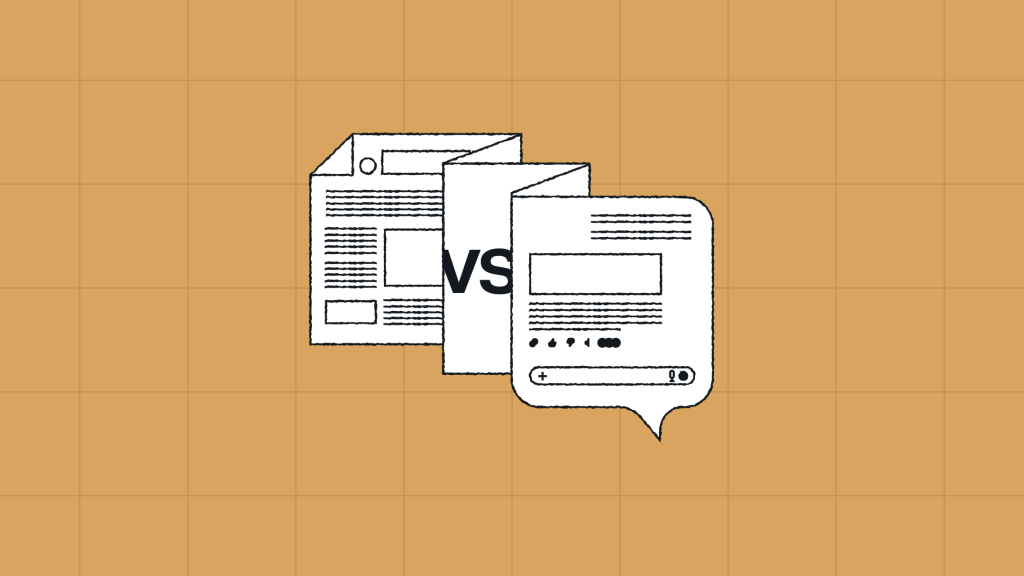
When should websites offer conversational interfaces vs. static article pages?
Alvey says both enterprise marketers and media organizations need to think about when their content needs to be “remixable” to best serve their audiences. While conversational AI offers speed, personalization, and multi-turn nuances, traditional article pages have some important strengths:
- Depth: A summarized answer in AI chat might scratch the surface of what someone needs, but an article page allows them to peruse critical details to make choices (such as a business purchase decision) with greater confidence. Article pages also offer opportunities to utilize SEO, which still drives the majority of referral traffic.
- Verifiability: It’s not always clear how AI search tools source answers. If you’re researching an important issue, an article page can contain links, rights information, and proprietary data to prove what’s being said. This is not only essential for publishers but for enterprises offering help centers, product pages, and thought leadership.
- Archival utility: Remixing content to help an LLM answer a question is helpful, but you still need article pages to provide a foundation of your expertise and insights. Organizations’ websites serve as vast knowledge bases that represent invaluable intellectual property (IP). They also offer versioning and audit trails that help organizations stay compliant with industry regulations and governance standards.
Conversational AI is simply remapping the customer journey. Short summaries may be the first step before someone digs deeper on a brand’s site, which means chat interfaces should exist in tandem with article pages.
“In the end, a CMS that understands blocks and is flexible and remixable works for both scenarios, whether you need highly fluid or very fixed content.”
— Brian Alvey, CTO, WordPress VIP
This table helps you compare the pros and cons of both approaches at a glance:
Value of conversational AI vs. static article pages
| Dimension | Conversational AI (Chat-style Interfaces) | Static article pages |
|---|---|---|
| Speed | Delivers direct answers quickly with minimal scrolling, often in a single response turn. | Requires scanning headings and paragraphs; faster for skimmers but slower than direct answers. |
| Personalization | Adapts responses to user intent, history, and context in real time, tailoring content on the fly. | Personalization is possible based on targeting segments with specific articles and pages. |
| Multi-turn nuance | Supports follow-up questions and clarifications, refining answers over multiple turns. | Nuance is embedded in the writing, allowing users to interpret and build confidence in what they’re learning. |
| Searchability | Lets users “search by asking,” surfacing synthesized answers across many sources. | Relies on on-page search, internal site search, and traditional navigation/TOC patterns. |
| Depth | Can summarize or drill down, but often compresses or omits details for brevity. | Provides full context, argumentation, and supporting detail in a coherent narrative. |
| Verifiability | May abstract or blend sources; verification depends on explicit citations or linked sources. | Shows quotations, references, and linked sources directly in context for easier verification. |
| SEO | Often sits on top of traditional search; visibility depends on how engines surface conversational answers. | Article URLs are primary SEO assets, earning rankings, backlinks, and structured data value. |
| Rights & attribution | Needs explicit design to preserve source attribution and content rights across synthesized answers. | Rights, bylines, and licensing are clearly attached to the page and its publisher. |
| Archival utility | Conversations are ephemeral unless they are logged; it’s hard to cite or revisit a specific past answer. | Articles provide stable, citable records that can be archived, versioned, and referenced over time. |
How can conversational AI make websites more accessible?
Everyone deserves the right to perceive, understand, and interact with online content and services, regardless of any disabilities or situational limitations. According to a 2025 study of more than a million home pages from WebAIM, however, there are an average of 51 errors per page, an increase of 10%. Conversational AI could contribute to greater accessibility if it’s used well and designed with purpose.
For example, WordPress VIP already supports leading accessibility standards that enable people who are blind to use screen readers. As Alvey points out, though, every one of us is “blind” at some point, such as when we’re driving and can’t look at a screen. Conversational AI, combined with voice recognition, changes that.
“If you can solve for full blindness, but also partial blindness, you open up productivity for people across the board,” he says. Besides driving, there might be moments of partial screen blindness at the gym, while taking public transit, or simply while multitasking.
Chat interfaces should be used to reduce the cognitive load in these situations and provide alternative access patterns by:
- Using clear, semantic structures.
- Designing consistent navigation and discoverability between chat and static pages.
- Leveraging vibration, audio, or haptic cues for mobile contexts.
- Measuring accessibility based on per-task success, time-to-information, and comprehension checks.
If you’re still in the early stages of this area, check out this guide on the fundamentals of accessibility for business websites.
Adapting to conversational AI by focusing on dual-purpose readiness
The future of the website will be a hybrid experience, where audiences can enjoy both convenient conversational AI and trusted article pages. Here’s a checklist to share with your content ops teams, developers, and others to get started:
- Audit your existing content for dual-use readiness: Look for long-form assets that you can repurpose into chat-friendly formats. Identify topics where you might need to continue building out article pages that fuel LLMs and AI overviews.
- Use content modeling to maximize effectiveness in both channels: Whether you’re hoping to show up in AI answers or want to remix your content when people arrive on your site, refresh assets to include summaries, context-aware snippets, and modular blocks with key takeaways.
- Review your CMS to ensure it has an architecture to support hybrid experiences such as indexing, caching, and syncing chat responses with static content.
- Map for intent: Think about how your audience will look for information and insights you offer, as well as their likely follow-up questions, to create response templates and exit ramps to your top article pages.
- Include a governance review so that your proprietary content includes all necessary attribution or labels that will establish provenance when LLMs scrape it.
- Update or enhance your accessibility policy to take conversational AI into account, and prioritize it alongside more traditional objectives and milestones. Both article pages and chat-style interfaces should get regular accessibility reviews.
- Discuss and clarify key performance indicators (KPIs): Engaged time still makes sense for article pages, while you may want to break out any referral traffic from AI search tools in reports you create from an analytics tool like Parse.ly. Content reuse can be another valuable internal metric, while conversational AI could shed new light on customer satisfaction (CSAT) scores.
The future of conversational AI in a CMS context
The chat-style interfaces of AI search tools and article pages aren’t at odds. They should be treated as congruent parts of a holistic content strategy.
Thinking in terms of dual-purpose digital experiences goes hand-in-hand with an accessibility-first approach to website design and development. It can all help differentiate your site, whether you’re an enterprise marketer, publisher, or even a public sector organization.
Blend article pages and conversational AI effectively, and you’re bound to give your audiences something to talk about.
Related content
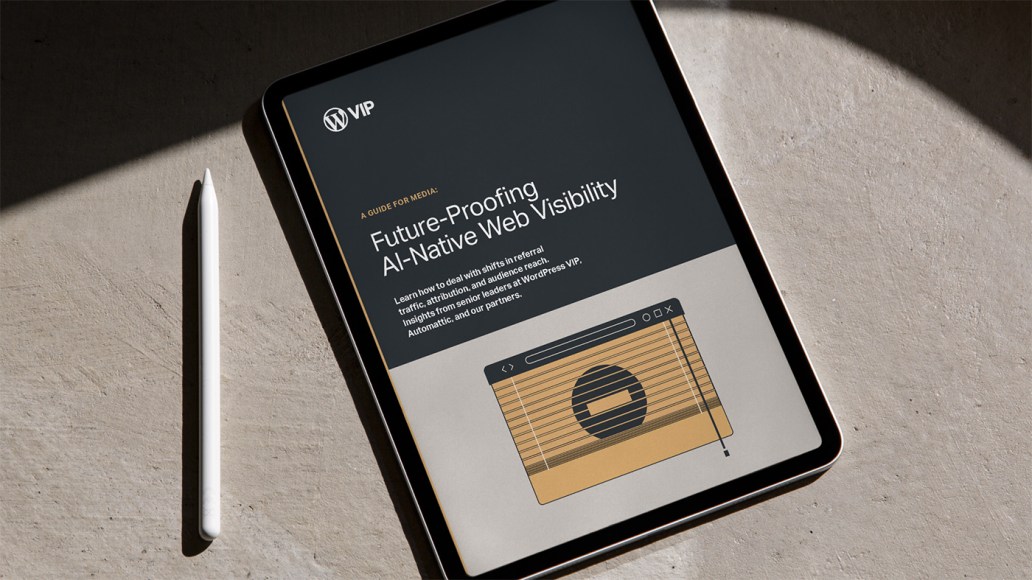
AI-Native Web Visibility: A Future-proofing Guide for Media
Author

Shane Schick
Founder, 360 Magazine
Shane Schick is a longtime technology journalist serving business leaders ranging from CIOs and CMOs to CEOs. His work has appeared in Yahoo Finance, the Globe & Mail and many other publications. Shane is currently the founder of a customer experience design publication called 360 Magazine. He lives in Toronto.