Key findings
74%
consumers say the internet feels less human than 10 years ago
40 min
average time before consumers experience “bot fatigue”
61%
consumers can’t name a brand using AI well in its messaging
16.6
average weekly hours enterprise teams spend improving AI visibility
Brands have been chasing AI visibility for two years. You’ve spent time and budget on it, yet your audience can’t name a single company they think is doing it well. The brands building for the next phase treat their website as the place where AI gets clean data and humans get something worth their time.
A less human web costs you readers.
Your audience can sense when a machine is talking to them. Most are checking out before they’ve decided whether they care. Bot fatigue sets in when the internet stops feeling honest. The small moments that used to make the web worth visiting are disappearing.
The AI web
consumers say the internet feels less human than it did 10 years ago
40 min
the average time to “bot fatigue,” when interactions start to feel synthetic
Can your content infrastructure measure this shift and respond to it?
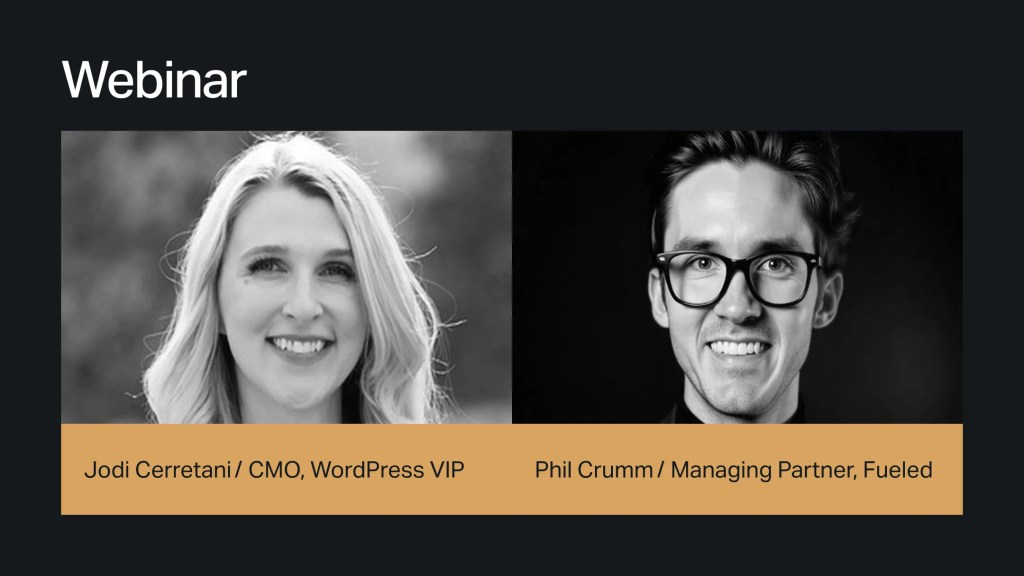
We cover how enterprise teams restructure content for AI discovery without losing what feels human in our webinar.
Nobody has won AI brand visibility yet
Every answer in our consumer survey pointed the same way: Nobody has done it well yet. Brands have spent the past year funding AI strategy, but consumers can’t point to a single company they think is getting it right.
The category has no incumbent, and no template to copy. The brand that builds that recognition first gets to define the standard.
Brand visibility
of consumers can’t name a brand that uses AI well in its messaging
16%
say no brand is using
AI well at all
60%
say AI in a brand’s messaging is a turnoff, not a feature
“No customer or user wakes up and says, ‘I hope I get to talk to a chat bot or an AI agent today.’ Human-centered design is truer today with artificial intelligence. Ironically, the answer is using AI to be more human.”
– Brian Solis, Head of Global Innovation, ServiceNow
Build for both audiences at once
AI needs to find the content and a person needs a reason to stay once they arrive. The second part is harder, and most enterprises are still guessing at it. The brands worth watching are betting that “staying” comes from giving people something to do: interactive content, dynamic experiences, the small moments a flat AI summary can’t deliver.
The website is the only place where both jobs run together. AI gets structured content it can cite, and the reader gets something worth their time. That’s the foundation you get on WordPress VIP.
The guide for building that dual-purpose site is in Future-Proof Your Brand for the AI-Native Web, a framework for preparing your web platform.
How enterprises are measuring AI brand visibility
The category is barely two years old and the toolset is still settling. No single dashboard tracks every AI surface. No shared definition of “good” exists yet. Pricing across the category swings from free to six figures depending on coverage and customization. What enterprises are using right now sorts into five categories, with real tools inside each.
This is a snapshot since the specific products will shift in the next 12 months. The categories will outlast them, which is why the section is organized around what the tools do.
What is AI brand visibility?
AI brand visibility is how often a brand appears in answers generated by AI engines like ChatGPT, Perplexity, Claude, and Gemini. It’s a different problem from search engine visibility, which measures rankings on result pages. A brand can rank at the top of Google and not appear inside ChatGPT at all. As of 2026, no single dashboard tracks AI brand visibility across every engine, and the category has no established leader.
AI citation monitoring platforms
This is the newest category, built specifically to track how often a brand appears in ChatGPT, Perplexity, Claude, and Gemini answers. These tools simulate queries at scale and surface citation frequency and sentiment over time.
- Tools in this category: Profound, BrightEdge, brandvisibility.ai, Tryevergreen, and a handful of smaller competitors that emerged in late 2025.
- Best for: Teams that need to connect AI visibility to business outcomes. AI citations are top-of-funnel. This category measures what those citations turn into. The brands that figure out which AI-referred visitors convert can defend their AI strategy spend.
- Watch for: Pricing models are still settling. Most platforms require four to six weeks of data collection before benchmarks are meaningful. Sample-based query simulation has gaps, and tools that promise “complete coverage” of every AI answer are overstating their methodology.
Search analytics with AI overlays
These are the established SEO platforms that extended into AI tracking starting in 2024. These tools layer AI citation data on top of traditional search metrics, which makes them useful for teams already running SEO workflows.
- Tools in this category: Similarweb (AI Intelligence), Semrush (AI Toolkit), Ahrefs (Brand Radar).
- Best for: SEO teams that want AI visibility data without a new vendor relationship. The integration with existing search reporting is the main value; it lets a team see organic and AI traffic in the same view.
- Watch for: AI coverage in this category is generally narrower than in dedicated AI citation platforms. The tools were built for search and are still catching up on the AI side. AI numbers here have to be treated as directional.
Web analytics with AI referral tracking
In this category: the analytics platforms that detect and segment traffic arriving from AI engines. These are the citation monitoring tools that tell a brand it’s being mentioned. This category tells a brand what happens after.
- Tools in this category: Parse.ly (part of the WordPress VIP product family), Plausible, Fathom Analytics, and most enterprise analytics platforms (Google Analytics 4) with custom segmentation.
- Best for: Teams that need to connect AI visibility to business outcomes. AI citations are top-of-funnel. This category measures what those citations turn into. The brands that figure out which AI-referred visitors convert can defend their AI strategy spend.
- Watch for: AI referrer detection still varies by platform. Some AI engines pass clean referrer headers, others rely on UTM tagging. Coordination between content and analytics teams is usually required to get clean data.
Brand intelligence platforms
Broader brand monitoring platforms that added AI surface tracking to existing social listening and PR monitoring capabilities. These cover AI engines as one input alongside social and traditional media mentions.
- Tools in this category: Brandwatch, Talkwalker, Meltwater.
- Best for: Communications and PR teams that already use these platforms for crisis monitoring and share-of-voice tracking. The AI coverage is an extension of an existing workflow.
- Watch for: AI coverage in this category tends to be lighter than in dedicated AI citation tools. Useful for a 30,000-foot view, less useful for granular citation analysis.
Custom solutions
This is what enterprises with engineering capacity are building themselves. These solutions use LLM APIs to query AI engines on a schedule and surface results in a dashboard the team controls. Pew Research Center’s work with WordPress VIP, covered in Chapter 2, is one example of this approach.
- Best for: Enterprises with engineering resources who want to define their own queries and control their own data. Ideal when the brand’s AI visibility strategy depends on niche or industry-specific queries that off-the-shelf tools don’t cover well.
- Watch for: Maintenance burden. LLM API access is now stable, though pricing and rate limits change frequently. Custom dashboards require ongoing engineering attention to keep current.
AI brand visibility tools at a glance
AI citation monitoring
What it tracks
Citation frequency and sentiment across AI engines
Tools in this category
Profound, brandvisibility.ai, Tryevergreen
Best for
Marketing teams that need a citation dashboard fast
Price range
$$ to $$$
Search analytics with AI overlays
What it tracks
AI citation data layered on traditional SEO metrics
Tools in this category
Similarweb, Semrush, Ahrefs
Best for
SEO teams that already use these platforms
Price range
$$ to $$$
Web analytics with AI referral tracking
What it tracks
Traffic and behavior from AI-referred visitors
Tools in this category
Parse.ly, Plausible, Fathom, Adobe Analytics, GA4
Best for
Teams connecting AI visibility to business outcomes
Price range
Free to $$$
Brand intelligence platforms
What it tracks
AI surface mentions alongside social and PR
Tools in this category
Brandwatch, Talkwalker, Meltwater
Best for
Communications and PR teams
Price range
$$$
Custom solutions
What it tracks
Whatever the team defines
Tools in this category
Built in-house using LLM APIs
Best for
Enterprises with engineering resources
Price range
Engineering cost
How to choose
Match the tool category to the question the team needs to answer:
- “Are we being cited?” Use an AI citation monitoring platform.
- “Are we being cited relative to our search performance?” Use search analytics with AI overlays.
- “What happens after we’re cited?” Use web analytics with AI referral tracking.
- “How does AI fit into our broader brand sentiment?” Use a brand intelligence platform.
- “We need to track something none of the above can answer.” Build a custom solution.
Most enterprises use two categories together. The most common combination is a tool from the AI citation monitoring category to know whether the brand shows up, and a tool from the web analytics category to know what that visibility is worth. The brands that figured this out first are the ones whose 2027 AI visibility budgets won’t be re-litigated in budget meetings.
Continue reading
Chapter 2
Brands chase AI visibility. Consumers chase the source.
Chapter 3
Consumers are wary of gatekeeping. More than marketers are.
Chapter 4
The website is still the default trust layer.
Chapter 5
The next website doesn’t look like a website.
FAQs about AI brand visibility
What is bot fatigue?
Bot fatigue is the point at which online interactions start to feel synthetic. WordPress VIP’s 2026 survey of 1,200 U.S. consumers found the average person hits bot fatigue in about 40 minutes. The broader pattern: 74% of consumers say the internet feels less human than it did 10 years ago, which is the consumer-mood shift driving most of what brands are now trying to solve in their AI strategy.
Has any brand won AI brand visibility?
Not yet. The category is too new and the measurement tools are too immature. Platforms cite different sources for different queries, the citations change as models update, and the metrics enterprise teams use to track AI visibility aren’t standardized across vendors. What’s clear is that no brand has built a durable AI presence. The brand that defines what “AI brand visibility done well” looks like will be the one that figures out the measurement layer before the rest of the market does.
What does this mean for enterprise websites?
The website has two jobs now and they have to run on the same foundation. AI engines need structured content they can find and cite accurately. Human visitors need a reason to stay once they click through from an AI summary. The brands solving for both are treating the website as the place where AI extracts data and a person has an experience worth their time. This is the central argument of WordPress VIP’s 2026 State of the Open Web report.